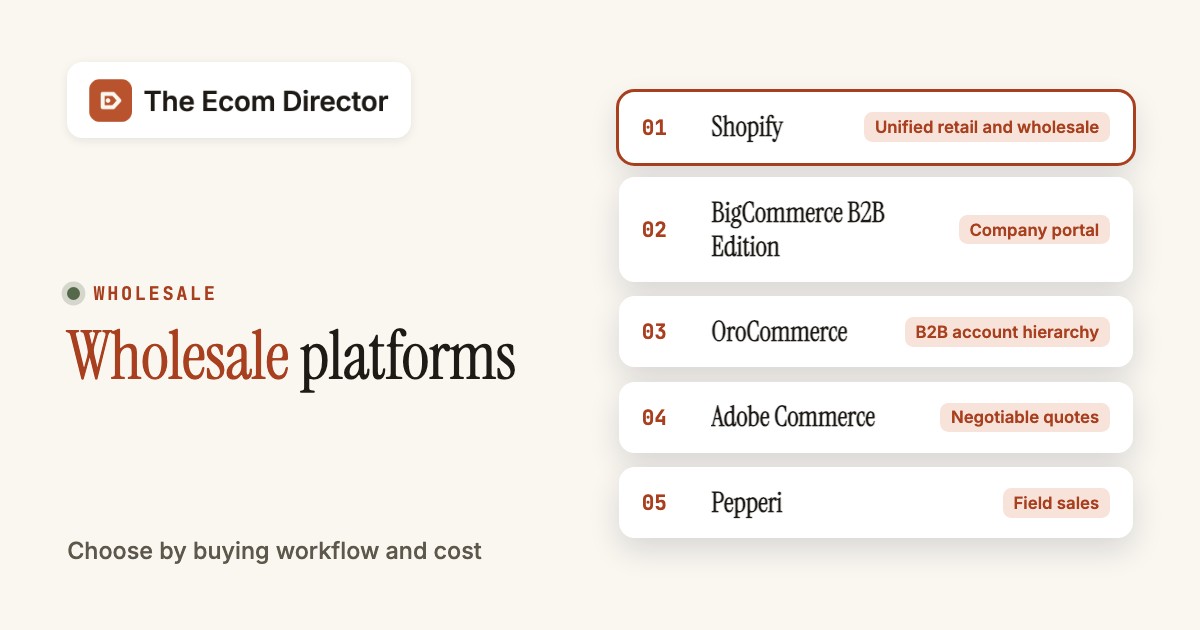
The best wholesale ecommerce platforms depend on how buyers place repeat orders, negotiate prices and obtain approvals. Shopify supports hybrid retail and wholesale, BigCommerce B2B Edition provides a buyer portal, OroCommerce handles complex account structures and Pepperi connects field sales with online ordering. A platform that looks good in a storefront demo can still fail at the ERP handoff, so this guide compares how each platform's operating workflows hold up.
The shortlist is based on each vendor's documented workflows and on how easily a buying team can test them. Where a vendor doesn't publish a US price, the entry says so instead of guessing.
Which wholesale ecommerce platforms fit each operating model?
Wholesale ecommerce platforms differ most in account structure, order capture and back-office integration. The picks below separate a retail brand that's adding wholesale from a distributor with field reps and a manufacturer whose ERP sets contract prices.
 Unified retail and wholesaleShopifyChoose Shopify when retail and wholesale should share a hosted storefront.
 Company portal and quotesBigCommerceChoose BigCommerce B2B Edition when buyer portal and negotiated quotes are central.
 B2B account hierarchyOroCommerceChoose OroCommerce when company hierarchy and workflow rules drive the project.
 Negotiable quotes and approvalsAdobe CommerceChoose Adobe Commerce when complex approval and quote rules need customization.
How do the wholesale ecommerce platforms compare?
The comparison shows each platform's core job and published pricing position. Public storefront subscriptions and custom B2B quotes aren't the same purchase, so request a scoped quote before using a headline figure in a budget.
| Tool | Category | What it handles | Starting price |
|---|---|---|---|
| Shopify | Hosted ecommerce | Catalog to checkout and inventory | Basic $29/mo billed annually; Plus from $2,300/mo |
| BigCommerce | Hosted ecommerce | Catalog to storefront and payments | B2B Edition: custom quote; Core storefront $29/mo billed annually |
| OroCommerce | B2B commerce platform | RFQs, price lists and company accounts | Community Edition free; Enterprise quote based on requirements |
| Adobe Commerce | Enterprise commerce platform | Shared catalogs and negotiable quotes | Custom enterprise quote |
 Pepperi | Ecommerce platforms | Field sales and B2B ordering together | Custom quote; no verified US public price |
 B2B Wave | Ecommerce platforms | Wholesale order portal for lean teams | Public pricing in GBP; request a US dollar quote |
 Sana Commerce | Ecommerce platforms | ERP-native catalog and contract pricing | Essential, Pro and Advanced: request pricing |
 Shopware | Open commerce platform | B2B Components on the Evolve plan | Community Edition free; Evolve from €2,400/mo excl. VAT |
Vendor list prices and quote requirements checked October 28, 2026. Annual billing stated where relevant. Fees, apps and implementation excluded. Euro and pound prices are shown as published, not converted.
How should a wholesale ecommerce platform be evaluated?
A wholesale platform should be evaluated with a real account, a real catalog rule and a complete order lifecycle. The evaluation shouldn't stop at page speed or appearance. It has to test buyer access, negotiated pricing, fulfillment and reconciliation.
A demo should include an approved buyer, an unauthorized buyer, a quote or negotiated price and an order export. The team's scorecard can rate each workflow as supported, supported with customization or unsupported.
- 1Buyer login
- Shopify
- OroCommerce
Breaks when Buyer sees another company's data - 2Price and quote
- BigCommerce
- Adobe Commerce
Breaks when Negotiated price differs from the quote - 3Order capture
- Pepperi
- B2B Wave
Breaks when Web and field orders apply different prices - 4ERP reconciliation
- Sana Commerce
- Shopware
Breaks when Order totals differ from the ERP record
Which wholesale platforms work for specific teams?
The right wholesale platform follows the way a business sells. The product reviews below cover a realistic buying scenario, the workflow to test and the trade-off that'd rule each platform out.
Shopify: unified DTC and wholesale
Shopify is best considered when retail and wholesale should share a hosted storefront. The decision hinges on a successful workflow demonstration, and a generic feature checklist won't settle it.
Shopify
Hosted commerce operations with location inventory and processor-dependent fees
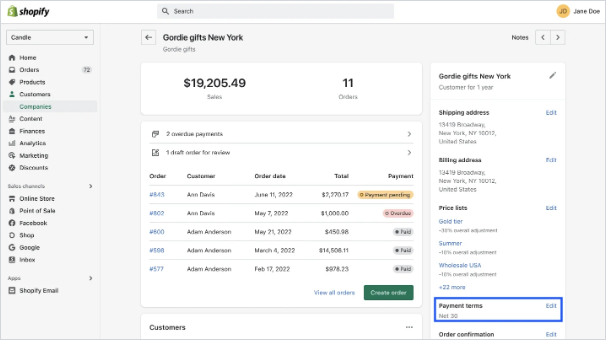
Shopify is a hosted commerce platform with company accounts and native wholesale catalogs. In 2026, wholesale no longer requires Plus. Basic, Grow and Advanced support B2B catalogs, while Plus adds direct company-level assignment and a larger catalog model.
A consumer brand begins selling to independent retailers while keeping its familiar online store. The operations lead creates a B2B market, tests a company login and assigns the correct assortment. A wholesale buyer needs to see the negotiated price before a cart is submitted, and shouldn't get a discount correction by email afterward.
- retail and wholesale should share a hosted storefront
- the buying flow can use Shopify company accounts and catalogs
- account-specific catalogs exceed the lower-plan model
- a heavily customized quote workflow requires a separate implementation
Workflow test and operating trade-offs
Use a sample company with separate delivery locations to check who can order and which payment terms appear. Then test quantity rules, a reorder and an invoice. A retailer with only a few wholesale tiers may find the lower plans adequate. An account manager who negotiates unique prices with every distributor needs to validate Plus-specific company catalog assignment.
The subscription is only the visible layer. Wholesale order exports, ERP mapping, freight and tax handling can still need apps or development. Ask for a worked order from login to fulfillment and name the person responsible for reconciling the wholesale customer ID across systems. If the same item's sold retail and wholesale, test what happens when the public price changes.
The test needs a buyer who can see the right products but can't change another company location's purchasing settings. Ask the account manager to change a price and repeat the same order through the customer account. Compare the resulting taxes, shipping and inventory records with a normal consumer purchase. If the two channels share a catalog, the team should document who approves a retail price update that could affect wholesale margins. An ownerless rule is a bigger operational risk than a missing storefront widget. Keep a record of every manual correction during the pilot, since they'll become recurring work after launch.
- Starting price
- Basic $29/mo billed annually; Plus from $2,300/mo
- Operating fit
- Unified DTC and wholesale
- Public price
- Basic from $29/mo billed annually; Plus from $2,300/mo on a three-year term
BigCommerce B2B Edition: company portal and quote management
BigCommerce B2B Edition is best considered when buyer portal and negotiated quotes are central. The decision hinges on a successful workflow demonstration; a generic feature checklist doesn't answer it.
BigCommerce
GMV-based plan thresholds and Open Payment Provider Fee
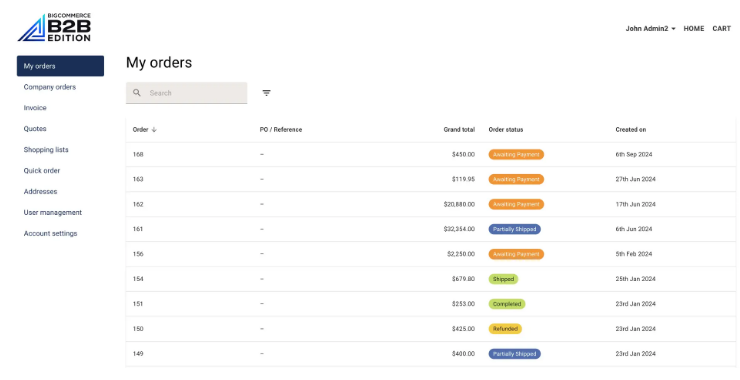
BigCommerce B2B Edition adds company management and a buyer portal to a hosted ecommerce platform. You can't infer the B2B Edition price from the public Core storefront subscription; it comes from sales. Its distinction is buyer and sales-rep workflow rather than a generic catalog theme.
A distributor wants sales representatives to help buyers with negotiated quotes while customers can log in and pay invoices themselves. Build a demonstration around a buyer who requests a quote, a representative who adjusts it and a finance user who records the payment. The quote-to-order handoff matters more than the homepage's design.
- buyer portal and negotiated quotes are central
- sales reps need to assist wholesale accounts
- a published B2B Edition price is a procurement requirement
- the project lacks time to validate quote-to-order mapping
Workflow test and operating trade-offs
Test a company with multiple authorized buyers. The portal needs to show the right shopping lists and invoice history without exposing another company's account. Verify the price list and customer group mapping in the current B2B Edition version. A merchant with a separate headless frontend should ask whether it'll use the hosted Buyer Portal or a customized one.
BigCommerce publishes Core, Growth, Scale and Performance storefront pricing, but B2B Edition is separately quoted. Model both charges and confirm payment-provider classification before treating the subscription as total cost. Get the buyer portal's configuration, integration effort and service commitments in writing. A clean sales demo isn't evidence that historical quotes and invoices will migrate intact.
The critical acceptance test is a negotiated quote with a deliberately invalid product or expired price. The team should show who's allowed to revise it, which buyer receives the updated terms and how the final order reaches finance. If sales representatives impersonate a buyer, log the action and check whether it's the correct account that stays visible throughout. The buyer portal may look polished while the underlying account mappings aren't right. Ask the integration owner to demonstrate an invoice correction as well as a successful order. If that requires a partner customization, get the partner's ongoing maintenance terms before selecting the platform.
- Starting price
- B2B Edition: custom quote; Core storefront $29/mo billed annually
- Operating fit
- Company portal and quote management
- Public price
- B2B Edition: custom quote; Core storefront $29/mo billed annually
OroCommerce: B2B-first account hierarchy and quoting
OroCommerce is best considered when company hierarchy and workflow rules drive the project. The decision hinges on a successful workflow demonstration; a generic feature checklist can't answer that.
OroCommerce
RFQs, price lists and company accounts
OroCommerce is a B2B-first commerce system aimed at manufacturers and distributors with layered accounts and complex selling rules. Its Community Edition has no license fee, while the enterprise license depends on commercial requirements and GMV. Neither statement makes the implementation free.
A manufacturer sells through distributors that each manage branches, purchasing managers and product restrictions. Rather than bolt a company hierarchy onto a retail store, the project team can model its buying organization as the core workflow. The test should follow a branch purchaser requesting an exception and the approver who's authorized to resolve it.
- company hierarchy and workflow rules drive the project
- the business can fund implementation and maintenance
- a low-touch hosted setup is the overriding goal
- a small team can't own custom workflow changes
Workflow test and operating trade-offs
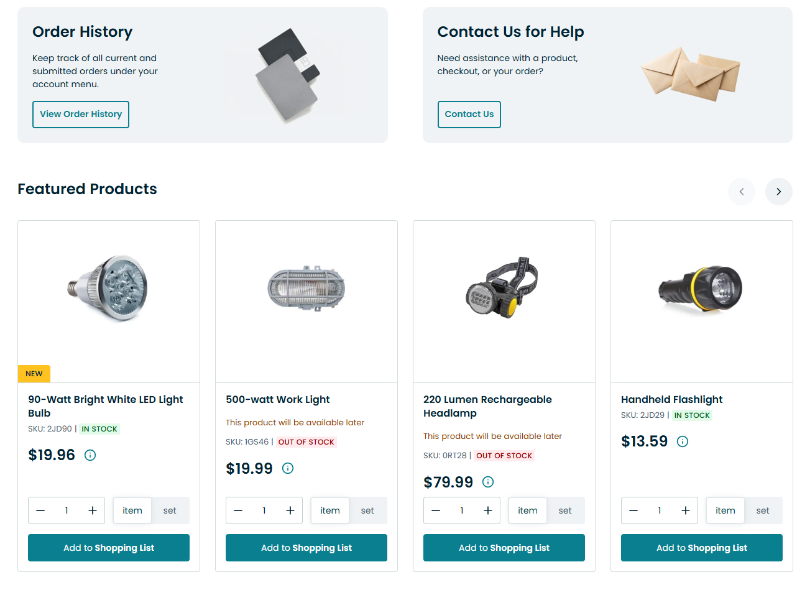
Build a requirements map that separates organizational structure, pricing rules, quote approvals and inventory availability. Then ask the implementation partner to demonstrate how each rule is configured and audited. The procurement owner should distinguish buyer accounts from internal admin users because license design and administrative workload aren't the same cost driver.
An open-source core is attractive for customization, but the operational risk is the work that's needed to keep customizations maintainable through upgrades. Price the data migration, integration, security review and training, not just the software. If the business only needs a shared wholesale discount tier, OroCommerce may be more system than the team can support.
Before choosing a deployment model, draw the actual organizational tree on paper. Include parent accounts, purchasing locations, regional pricing and exceptions to standard approval. Ask the vendor to reproduce that tree in the product rather than describe the workflow in a slide. A system that handles one distributor may behave differently when that purchasing manager's access spans multiple branches. Document the escalation path for a denied purchase and who may override a negotiated quote. Those aren't cosmetic preferences; they're operational controls. Price the effort to change them after the initial implementation because business structures rarely remain static.
- Starting price
- Community Edition free; Enterprise quote based on requirements
- Operating fit
- B2B-first account hierarchy and quoting
- Public price
- Community Edition free; Enterprise quote based on requirements
Adobe Commerce: negotiable quotes and purchasing approvals
Adobe Commerce is best considered when complex approval and quote rules need customization. The decision hinges on a successful workflow demonstration, which a feature checklist won't give you.
Adobe Commerce
Shared catalogs and negotiable quotes
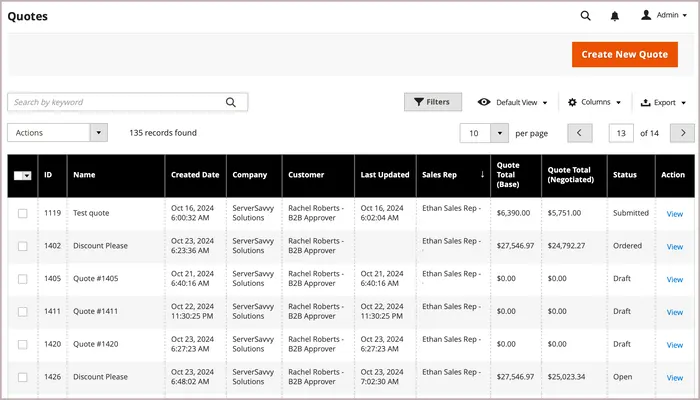
Adobe Commerce is a customizable ecommerce platform whose B2B modules include negotiable quotes, company accounts and purchase-order approvals. It's most relevant when wholesale operations already have complex permissions or catalog logic and an engineering team can manage them.
Consider an industrial supplier where procurement buyers repeatedly order the same parts but must negotiate unusual quantities. Adobe Commerce supports requisition lists that persist after items are added to a cart. That design can reduce repeated data entry, while the negotiable quote flow gives the buyer and sales team a place to settle the commercial terms.
- complex approval and quote rules need customization
- engineering capacity is available
- the goal is a fast, low-maintenance wholesale launch
- the business can't support a bespoke implementation
Workflow test and operating trade-offs
For a proof of concept, create a company account with a purchaser and an approver. Submit a quote from the cart, amend the quantity and carry the approved result into checkout. Ask the team to demonstrate a purchase order that needs approval, then compare its audit trail with the business's policy. Test the same workflow on the storefront architecture you're planning.
Implementation scope is the purchase decision. The vendor doesn't publish a simple self-service US license price for this enterprise setup, so request a scoped proposal. Include hosting, upgrade ownership, B2B extension compatibility and the cost of custom pricing logic. A flexible platform only helps if the organization's engineers can maintain its choices.
A useful evaluation also includes the next upgrade, not only the initial deployment. Ask the agency to identify which extensions touch checkout, quotes and purchasing permissions. Then simulate a change to the company approval policy and estimate the testing effort. A custom module can work perfectly today and still create an expensive regression risk when another module's behavior changes. Finance should review the quote approval audit trail while IT checks the integration logs. The decision gets easier when both groups agree on an acceptable manual fallback. If you'll need frequent code releases, assign a permanent product owner before signing.
- Starting price
- Custom enterprise quote
- Operating fit
- Negotiable quotes and purchasing approvals
- Public price
- Custom enterprise quote
Pepperi: field sales and B2B ordering together
Pepperi is best considered when field representatives and online buyers share accounts. The decision hinges on a successful workflow demonstration; a generic checklist isn't enough.
Pepperi
Wholesale ordering for both online buyers and field sales reps
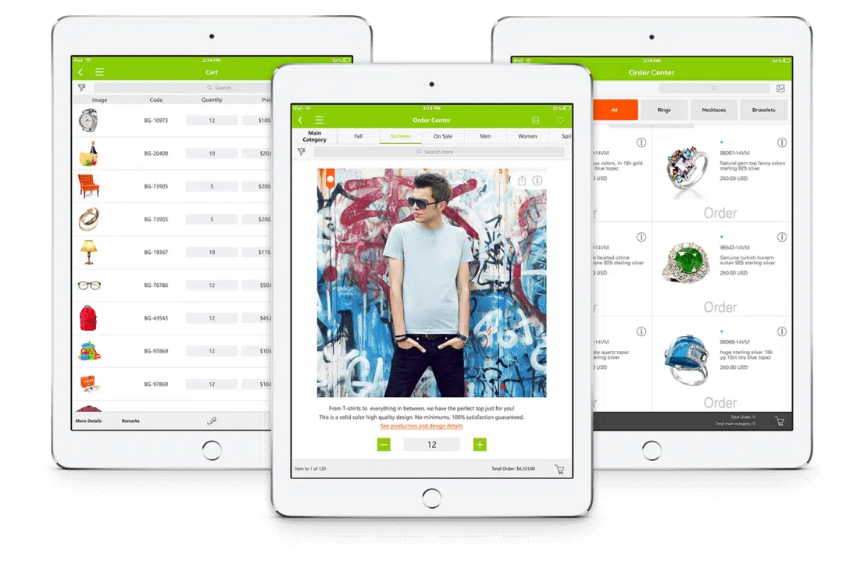
Pepperi is a wholesale commerce platform that connects buyer self-service with sales-representative ordering. Its advantage is a common operating model for distributors whose orders arrive through both a web portal and people in the field.
A food or beauty distributor may take a store replenishment order on a tablet during a visit, then receive a second order from the buyer at night. Pepperi documents buyer-specific catalogs, prices, discounts and order history. The operations team should check that the two paths don't apply different commercial rules to the same account.
- field representatives and online buyers share accounts
- trade promotions must be consistent across channels
- there's no field sales process to support
- a self-service storefront alone solves the problem
Workflow test and operating trade-offs
Give a sales representative a realistic customer record, then ask them to prepare an order without returning to a desktop. Reconcile the order with inventory and the buyer portal. Compare the resulting promotion and discount against the account's signed terms. Pepperi documents offline capabilities in its sales rep app, so a buyer should evaluate offline behavior if representatives visit stores where connectivity's poor.
Because buyer, rep and admin roles all touch the same account, user-role testing deserves its own pilot step. Ask for a written USD quote covering field licenses, customer portal, integrations, support and implementation. If your sales motion is entirely self-service, you probably don't need the additional field capabilities.
For a distributor with sales territories, the pilot should include a rep who changes accounts between visits and a customer who places an online order while the rep is in the field. Compare the promotional price, order ownership and the stock picture. A conflict needs an explicit resolution rule, and a promise that synchronization will work isn't one. Ask whether the company can configure those rules itself and which changes need the vendor's support. Training matters because field representatives may be under time pressure when they're using the product. Measure the steps needed to find a previous order and repeat it, then document the workflow that staff can realistically follow.
- Starting price
- Custom quote; no verified US public price
- Operating fit
- Field sales and B2B ordering together
- Public price
- Custom quote; no verified US public price
B2B Wave: wholesale order portal for lean teams
B2B Wave is best considered when a private reorder portal is the main need. The decision hinges on a successful workflow demonstration; a generic feature list doesn't prove it.
B2B Wave
Private wholesale reorder portal with customer-specific price lists
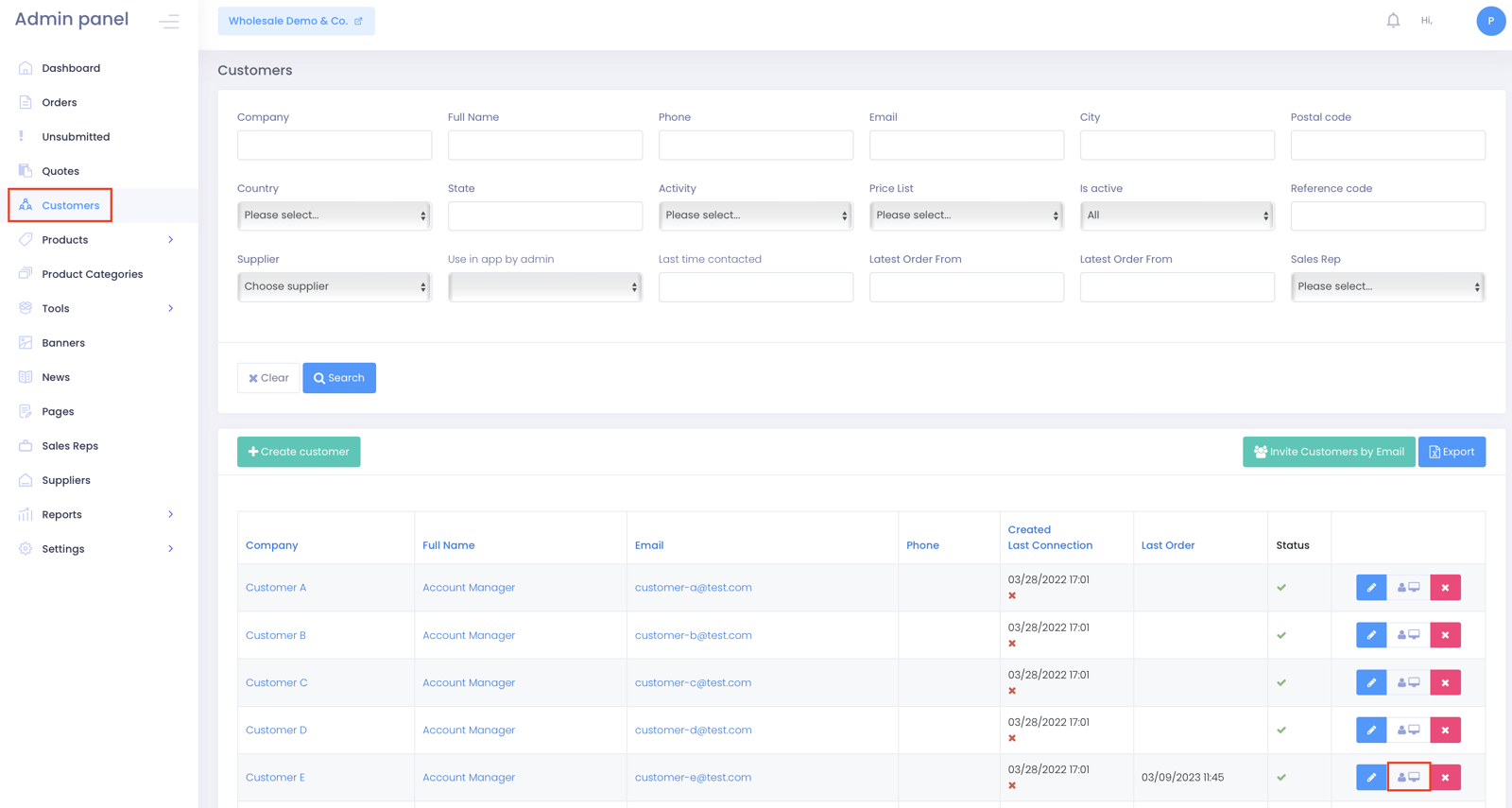
B2B Wave is a wholesale ordering platform built around personalized product lists and straightforward order processing. It appeals to distributors replacing spreadsheets and emailed order forms without redesigning their consumer storefront.
A small wholesaler receives repeat orders from stores that each buy a different assortment. Instead of expecting buyers to remember stock codes, the team can create a private catalog and let customers reorder from lists they're used to. The practical win is fewer order corrections, and a flashy public storefront isn't the point.
- a private reorder portal is the main need
- a lean operations team wants fewer manual orders
- complex multi-organization permissions dominate
- US pricing can't be obtained before procurement approval
Workflow test and operating trade-offs
During evaluation, import a real but anonymized catalog and give a test customer its own pricing. Place a repeat order, change a quantity and compare the exported record with accounting. B2B Wave lists more than 20 integrations, including QuickBooks Online and Xero for accounting, but the buyer should verify the specific connector and whether sync is scheduled or event-driven.
B2B Wave's public pricing page shows pounds sterling (£270 per month listed for its Lite, Pro and Scale plans, with an introductory discount), not a US dollar subscription, so no converted figure is shown here. Ask sales for a US quote that specifies users, customer price lists, product limits and onboarding. A low headline fee can mislead if the company's needs include more price lists or additional sales-rep seats.
Build a short list of the most common manual mistakes from the current ordering process. Typical categories to inspect are an outdated product code, the wrong price list and a missing delivery address. Ask B2B Wave to handle each case in a demo and show what the administrator's view displays afterward. A platform that prevents those errors is more valuable than one that merely makes orders faster to type. The pilot should also include an accounting exception, such as an order that's pending credit approval. Record whether the system flags the problem or whether it's left to staff to notice it outside the platform.
- Starting price
- Public pricing in GBP; request a US dollar quote
- Operating fit
- Wholesale order portal for lean teams
- Public price
- Website shows GBP pricing; request a US dollar quote
Sana Commerce: ERP-native catalog and contract pricing
Sana Commerce is best considered when SAP or Dynamics is the operational source of truth. The decision hinges on a successful workflow demonstration, and you can't read that off a feature checklist.
Sana Commerce
ERP-driven B2B storefront for SAP and Dynamics shops
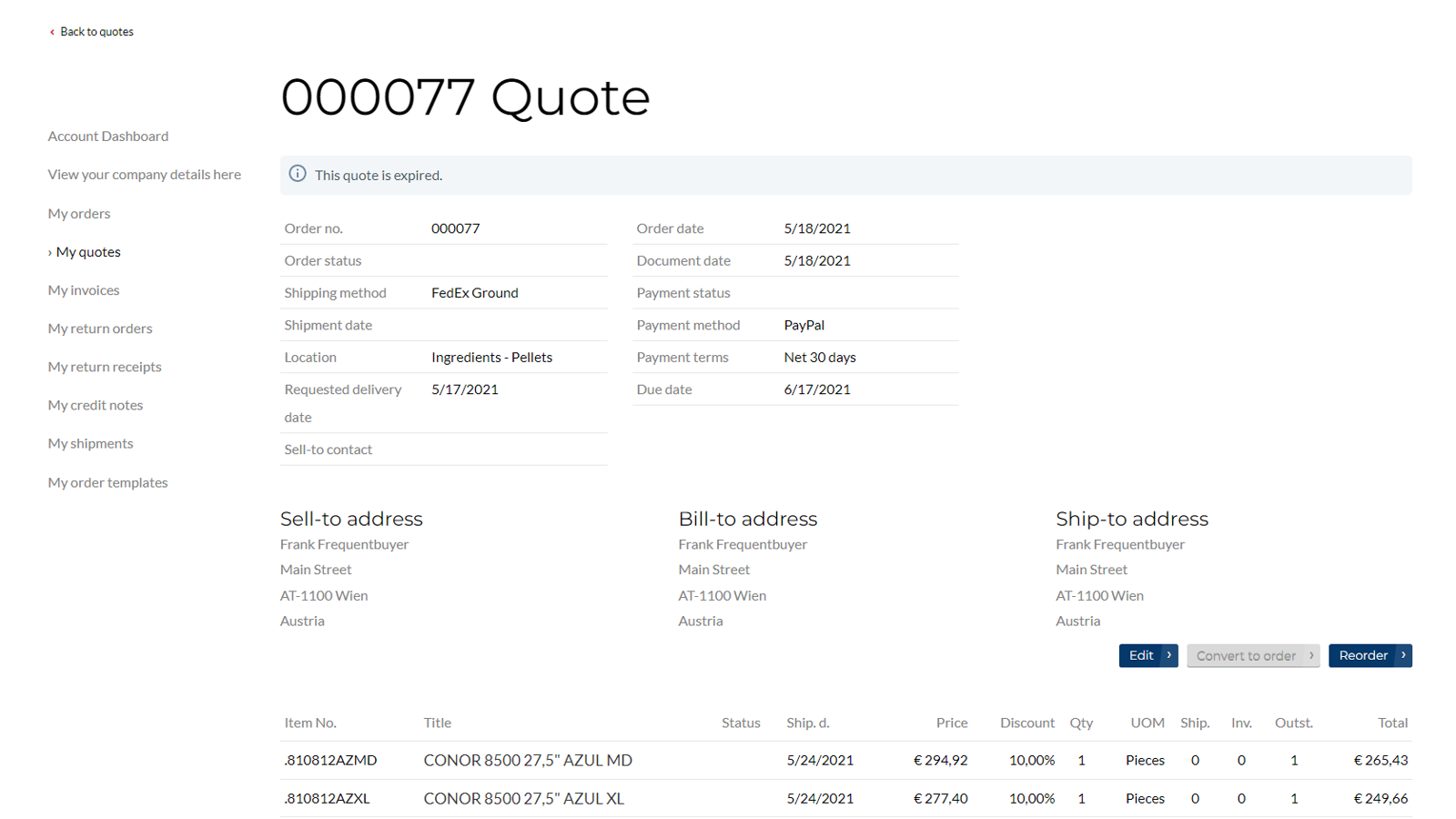
Sana Commerce is a B2B ecommerce platform centered on SAP and Microsoft Dynamics ERP data. Rather than maintaining a separate copy of every account price, the storefront's designed to use the ERP as the source for commercial terms and stock.
A manufacturer's contract prices and warehouse availability live inside its ERP, but buyers still call a representative for a stock check. Sana makes that synchronization the core of the store experience. The strongest test isn't a static product page. It's a customer login that reflects the correct contract price after an ERP update.
- SAP or Dynamics is the operational source of truth
- buyer-specific ERP prices must be reflected online
- the business uses an unsupported ERP
- ERP master data can't be cleaned before launch
Workflow test and operating trade-offs
Ask the implementation team to walk through a stock adjustment, a quote conversion and an order posting back to the ERP. Compare the resulting document numbers and taxes with the source system. Sana lists Essential, Pro and Advanced plans; quote-to-order conversion appears in Pro. Confirm which plan includes each workflow you'll need before agreeing to a proposal.
This architecture is less compelling when the merchant doesn't run a supported ERP or when the ERP contains inconsistent customer records. A live connection doesn't fix poor master data. Budget for ERP cleanup, testing and change management, then get the license and implementation charges in a written US proposal.
The biggest diligence question is data authority. Decide whether stock, account terms and customer addresses are controlled in the ERP or in the commerce interface. If both systems can edit the same field, the team needs a conflict policy before going live. Ask the vendor to demonstrate an ERP outage and explain what a buyer sees when real-time data isn't available. Test an item that has stock in one warehouse but not another, then confirm the resulting order record. These checks reveal whether the architecture fits the fulfillment operation as it's actually run. They also show how much ERP cleanup the business has to fund.
- Starting price
- Essential, Pro and Advanced: request pricing
- Operating fit
- ERP-native catalog and contract pricing
- Public price
- Essential, Pro and Advanced: request pricing
Shopware: composable storefront with B2B buying controls
Shopware is best considered when B2B purchasing workflows need configurable storefronts. The decision hinges on a successful workflow demonstration; a feature checklist won't show it.
Shopware
B2B Components on the Evolve plan
Shopware is an open-source-based ecommerce platform with paid tiers for more demanding commerce workflows. Its Evolve tier lists B2B quotes and purchasing approvals, while Beyond lists customer-specific pricing. Those boundaries matter for wholesalers buying functionality, not just a platform name.
A regional wholesaler wants a storefront that marketing can manage while purchasing teams need an approval path. The technical team can begin with the storefront and then test the exact B2B component tier required. The buyer should separate content flexibility from contractual buying rules, since the two don't necessarily sit at the same plan level.
- B2B purchasing workflows need configurable storefronts
- the team can maintain integrations and extensions
- a single hosted subscription is the priority
- a fixed US list price is required before evaluation
Workflow test and operating trade-offs
Run a sample quote through approval, then test a contract price arriving from an external system. Record which capability requires Evolve, Beyond or a partner extension. Ask how multi-location stock and B2B purchasing rights behave across storefronts. The demonstration should show what happens when an ERP update doesn't go through.
Shopware's public English pricing page shows euro amounts by default (Evolve starts at €2,400 per month excluding VAT), so no converted USD number is presented here. Request a US commercial proposal that includes hosting, implementation, support and the intended B2B tier. A team that's choosing Shopware for its open-source core still needs to budget engineering ownership and upgrades.
Separate the software demonstration from the implementation partner's promises. Require the partner to show which B2B features come from the contracted tier and which depend on custom code. Use the same customer with a negotiated price and an approval requirement across the whole test. Then ask how a future release would be validated without interrupting orders. A flexible frontend can be an advantage for a merchandising team, but it brings more design decisions that someone has to own. Assign responsibility for catalog governance, storefront updates and integration incidents. The most credible proposal states those ownership boundaries plainly.
- Starting price
- Community Edition free; Evolve from €2,400/mo excl. VAT
- Operating fit
- Composable storefront with B2B buying controls
- Public price
- Community Edition free; Evolve from €2,400/mo excl. VAT (EUR on public page)
What changes the total cost of wholesale ecommerce?
Wholesale ecommerce costs include subscriptions, custom development, integration maintenance and payment processing. A company should model the same order volume and buyer workflows across candidates before treating a free core or a low storefront fee as the cheapest option.
The license clearly isn't the same as the cost of running the platform. For every vendor, request a quote that distinguishes platform access, the B2B module, implementation, support and recurring integration work. Where a public price is in a different currency, keep it out of a US dollar comparison rather than convert it without a real quote.
| Cost component | Question to ask | Evidence to request |
|---|---|---|
| Platform license | Which buyer roles and storefronts are included? | Written US quote |
| ERP integration | Who owns pricing and inventory synchronization? | Field mapping and error log |
| Buyer onboarding | Who approves new wholesale accounts? | Role matrix and demo |
| Operations | Who fixes failed orders and exports? | Support terms and escalation path |
A license that includes many features can certainly still be expensive when the team can't operate them. A cheaper platform can cost more if every account-specific rule needs custom development. Put the same requirements in every vendor's request for proposal.
How do you choose a wholesale ecommerce platform?
Choose a wholesale ecommerce platform by validating account pricing, approval rules and ERP handoffs against your real process. A structured pilot makes the decision defensible and exposes the work that's hidden before a contract is signed.
- Load a representative customer-specific catalog
- Test buyer and approver roles
- Confirm the correct negotiated price
- Create a repeat order and a quote
- Export an order to the ERP or accounting system
- Reconcile inventory and invoice records
- Get a written US price and support scope
Assign the ecommerce owner to catalog and storefront checks, finance to terms and invoice reconciliation and IT to integration failures. The pilot doesn't pass until the buyer can place the order and the back office can account for it without a manual correction.
What should the team do after shortlisting?
A shortlist shouldn't become another feature spreadsheet; it should become a procurement test. Ask each vendor or implementation partner to demonstrate the same buyer journey and identify what requires custom work. Record each unresolved issue's owner and obtain written pricing for the exact scope.
Frequently asked questions
These answers cover the buying and migration decisions that're still open after a platform comparison.
Does Shopify require Plus for wholesale?
Shopify's core B2B features run on Basic, Grow and Advanced. Plus is what you'll need for unlimited B2B market catalogs and direct catalog assignment to companies.
Is a free wholesale ecommerce platform free to operate?
A free core license doesn't include hosting, integration work or ongoing maintenance. Budget those separately before comparing it with a hosted subscription.
Which wholesale platform is suitable for ERP-first manufacturers?
Sana Commerce's design centers on SAP and Microsoft Dynamics data. A manufacturer should validate the exact ERP version and live stock and price synchronization.
Can a wholesale portal support sales representatives?
Pepperi's buyer portal sits alongside field order-taking workflows. Test that a representative and an online buyer get the same account prices.
What should a wholesale platform demo include?
A useful demo covers buyer login, account-specific pricing, quote or approval handling and order reconciliation. A theme walkthrough alone clearly isn't enough.